
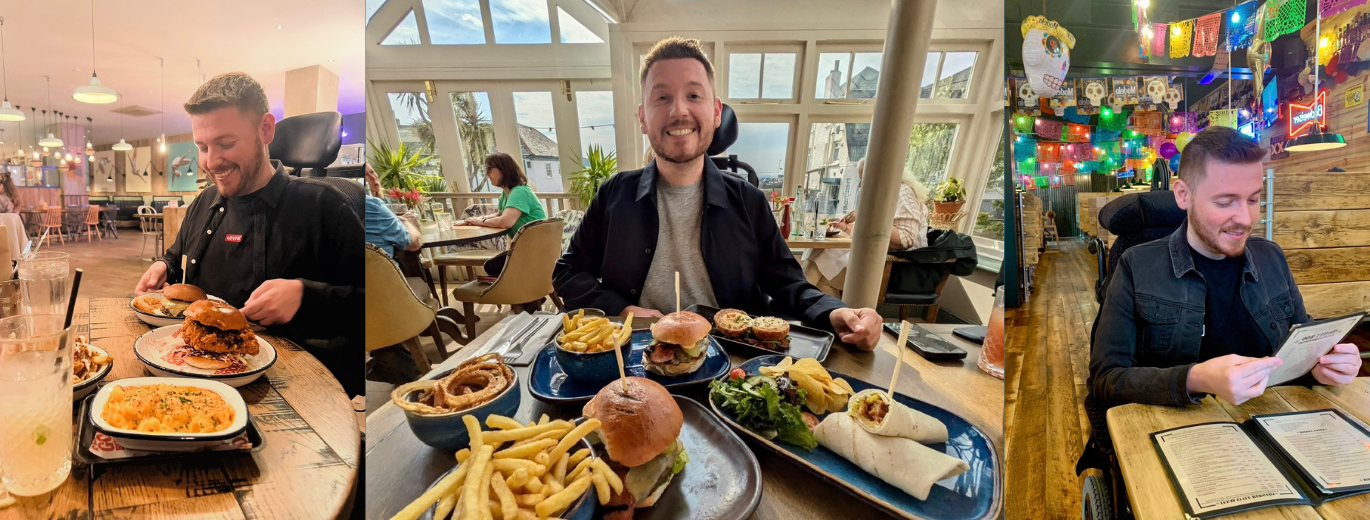
A Foodie's Guide to Accessible Dining
For many disabled people, dining out involves so much more than simply booking a table. It’s about feeling comfortable, included, and having the ability to enjoy yourself without unnecessary barriers.
This blog post explores the practical details that help turn a meal out into an enjoyable experience, and why having reliable access information matters so much.
My name is Ross and I’m a full-time wheelchair user… with a full-time appetite.
Often described as a social butterfly, food has always played a huge role in my life - whether that’s catching up with friends over brunch, discovering new restaurants for my blog, or enjoying a Sunday roast with the family. Dining out is so much more than just a meal for me. It’s about connection, it’s about atmosphere, and it’s about feeling included within my community.
As a full-time wheelchair user, there’s often a level of organisation involved that many people don’t realise. Before I even leave the house, I’m already thinking about accessibility information.
Planning ahead matters
Long before accessibility information was available online, I used to do a “rekkie” when visiting somewhere new. This involved driving to the venue in advance to scope out the practicalities such as like parking, step-free access, and accessible toilets - all to avoid any unexpected or awkward situations on the day.
Not only was this incredibly time-consuming, but it also came with extra costs. I mean… have you seen the price of fuel these days?!
Thankfully, websites like AccessAble have made that process so much easier. Being able to check detailed accessibility information beforehand means I can plan with confidence without needing to make a separate trip first.
I’ve lost count of the number of times I’ve arrived somewhere labelled “accessible” only to discover there’s a heavy manual door, cramped seating, or an accessible toilet being used as a storage cupboard. Experiences like this can be frustrating and honestly quite disheartening.
A great dining experience for me is one where accessibility has been clearly considered from the start - not just an afterthought.
The kind of places I usually look for
When choosing somewhere to eat, I tend to go for venues that feel spacious, welcoming, and relaxed. Restaurants with open layouts instantly make me feel more comfortable because I know I’ll be able to move around easily without awkward manoeuvring between tightly packed tables.
Good lighting and a cosy atmosphere also makes a huge difference. I personally love modern restaurants, independent cafés, and gastro pubs that have clearly thought about the customer experience as a whole.
As much as I love the aesthetic and growing popularity of American diner-style venues, restaurants with fixed seating booths often aren’t very practical for wheelchair users - particularly if there’s more than one wheelchair user within your group. Personally, I much prefer rounded or flexible table layouts, as they make it far easier for everyone to sit comfortably together and actually face one another while chatting.
There have been many occasions where multiple wheelchair users in our group have ended up positioned along the same side of the table, which usually means spending the evening with a cramped neck, turning side to side just to join in the conversation.
It’s the little details that make a difference
Many venues now offer online ordering through QR codes at your table - which is something I personally love! It removes the hassle of trying to navigate through crowded tables to reach the bar, as well as the challenge of accessing card machines that aren’t always positioned with wheelchair users in mind. As an added bonus, everyone can order and pay individually, which completely avoids the “who’s getting the bill?” debate.
Outdoor dining spaces can also be a fantastic alternative in the warmer months, especially when they’re level and easy to navigate. There’s something really enjoyable about being able to relax outside with friends without worrying about access issues.
As much as accessibility matters, the food itself still has to be good too! I love places with varied menus and options that cater to different dietary needs and preferences, because inclusive dining should extend beyond physical access too.
What makes a dining experience great for me
Alongside the practical accessibility needs I’ve already mentioned, there are lots of other factors that can make a dining experience truly enjoyable.
Atmosphere and noise levels can have a huge impact, particularly for people with sensory needs. Whilst I enjoy a venue with a good buzz, restaurants that are extremely crowded or excessively loud can quickly become overwhelming. The best venues, in my opinion, are the ones that strike a balance between lively and comfortable.
I also really appreciate restaurants with beautiful views or thoughtful interior design, as those little details add so much to the overall experience. Living in Cornwall, I’m lucky to have plenty of coastal spots nearby, so I’ll often seek out somewhere with a sea view to make the occasion feel even more special.
Another major factor is the attitude of staff. The places I remember most positively are always the ones where accessibility is approached naturally and respectfully. Friendly staff who are happy to help when needed - without being patronising or making assumptions - can completely shape the experience.
Often, it’s the smallest gestures that leave the biggest impression: moving a chair without hesitation, helping guide me through the easiest route, or simply speaking to me directly rather than the person I’m with. Those moments really do matter.
Why detailed access information is so important
As someone who loves food, socialising, and discovering new places, I know firsthand how important accessibility is in making these experiences enjoyable. So when venues get it right, it doesn’t just benefit wheelchair users - it creates a better, more inclusive environment for everyone.
It’s also important to recognise the value of the Purple Pound. Disabled people enjoy dining out just like everyone else - and accessible venues will ultimately benefit from welcoming a wider community of customers.
Having reliable information available beforehand allows people to make informed choices and focus on enjoying the experience instead of worrying about unexpected barriers.
Dining out should be something everyone can enjoy with confidence and comfort. That’s why I’d always encourage people to make use of Detailed Access Guides before visiting somewhere new. Because at the end of the day, everyone deserves the opportunity to enjoy great food, great company, and memorable moments with the one’s they love.
If there’s one thing I hope this blog highlights, it’s that dining out is so much more than just the food on your plate… it’s about the whole experience.