
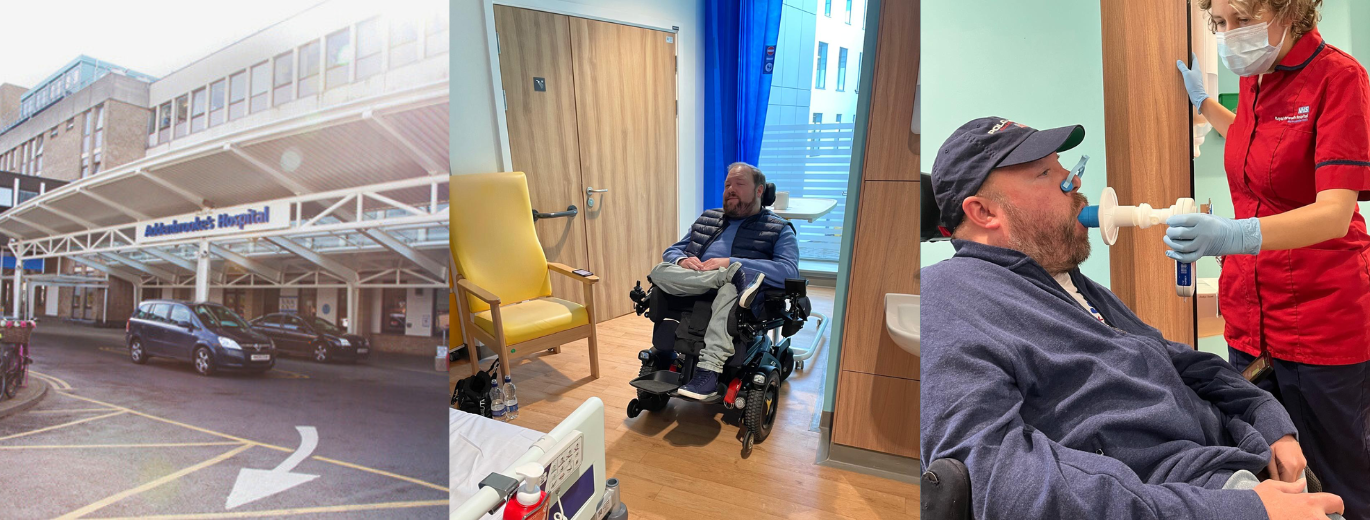
Using Detailed Access Guides for hospital visits: Why they matter more than you think
A Detailed Access Guide can turn a stressful hospital visit into something calmer, more predictable and accessible.
In this blog post, I’ll explain what a Detailed Access Guide is, how I used one for Addenbrooke’s Hospital, and why it can make such a difference if you’re disabled, chronically ill, neurodivergent, or supporting someone who is. By the end, you’ll know how to use the guides and where to find them before your next appointment.
But first, I want to share something personal, because for me, accessibility isn’t abstract. It’s deeply tied to lived experience.
Why access information matters so much to me
You would think that someone who has been going to hospital since the age of two would be used to it by now. I’m 45 so you’d assume I’d roll in confidently, knowing the routine. But I don’t. Hospital anxiety has been with me most of my life.
As a child and teenager, hospital appointments were mostly positive. They were a mixture of therapy and treatments that helped me progress or stay stable. But everything changed at 17 when I had my spinal fusion. What should have been a turning point became six months in hospital, two bouts of peritonitis, a temporary colostomy, and nearly three weeks drifting in and out of a coma. That level of trauma doesn’t fade; it reshapes how you feel about hospitals forever.
A year later, when my colostomy was reversed, poor nursing care damaged my spinal fusion, something that had to be repaired eight years later. That short stay taught me something harsh: my parents were far better nurses than many of the people paid to look after me.
As I moved into 24/7 care, that realisation only deepened. My PAs, the people who know me best consistently provide better care, more dignity and more safety than I’ve often experienced on wards. I’ve discharged myself early more than once, knowing I’d get a better shower, a proper meal and round-the-clock personalised care at home. If I ever did die, I thought, I’d rather go clean and well fed, in my own bed, supported by people who actually know me.
So now, when I go to hospital, the anxiety starts long before the appointment time. It’s not just the medical side, it’s the fear of unpredictability, losing autonomy, being admitted, or being cared for by people who don’t understand my body the way my team does.
That’s why Detailed Access Guides matter to me.
They don’t fix the past, but they remove one layer of worry. If I know where the accessible toilets are, whether the parking will actually work for my adapted vehicle, and even where I can grab a cup of tea, it helps me breathe a little easier.
Those small bits of certainty give me back a tiny piece of control in a setting where disabled people often have the least.
That context shapes everything that follows.
What is a Detailed Access Guide?
A Detailed Access Guide is your chance to see what a place is like before you arrive. Instead of vague statements like “wheelchair friendly”, the guides give reliable, factual detail:
- Step-free routes
- Location and number of Blue Badge bays
- Door widths, lift dimensions and ramp gradients
- Availability of hearing loops, signage and tactile paving
- Accessible toilet layouts
- Photos of entrances, corridors and waiting rooms
It’s information you can trust and use to make your own decisions, not someone else’s opinion of what “good access” means.
That’s what sets AccessAble apart: it isn’t binary, it’s factual and gathered by trained surveyors who understand what real accessibility looks like.
For hospital visits, that level of clarity can be game-changing. Appointments are stressful enough; uncertainty around parking, steps, crowds or distances only makes it worse. The guides help remove those unknowns.
How using the Addenbrooke’s guide confirmed its accuracy — and why I trust it elsewhere.
I’ve been going to Addenbrooke’s Hospital for years, so I already know the site well. That actually made it the perfect place to test how accurate the AccessAble Detailed Access Guide really was. I went through the guide with the eye of someone who’s navigated Addenbrooke’s countless times. Parking, entrances, lifts, long corridors, the lot. It all matched my lived experience almost word for word.
- The details about the parking lined up exactly with what works for my adapted vehicle.
- The description and photos of the entrances were spot-on, including automatic doors, level thresholds, layouts I recognised.
- The measurements and routes for getting around the hospital mirrored what I already knew worked for my powerchair.
- The listings of accessible toilets were precisely where I’ve used them in real life.
Seeing the guide reflect my actual, on-the-ground experience gave me a huge amount of confidence. If it could accurately describe a hospital I know as well as Addenbrooke’s, then I know that for any new hospital I visit, the Detailed Access Guide will give me the same level of clarity, accuracy and predictability. And that makes a massive difference.
How to use Addenbrooke’s Detailed Access Guide
Here’s how to make the most of a Detailed Access Guide for Addenbrooke’s Hospital.
1. Find the correct guide
- Visit the AccessAble website.
- Search for “Addenbrooke’s Hospital” or the hospital you’re going to.
- Select the main hospital site.
2. Start with the overview
This gives you a quick snapshot:
- Location map
- Short description
- Key accessibility features
It’s a great “first impression” before diving deeper.
3. Look at “Getting here” and parking
For Addenbrooke’s, this section explains:
- Blue Badge bay locations
- Park & Ride options
- Drop-off points
- Public transport access
- Path gradients and surfaces
- Distance from the car parks to main entrances
This helps you plan energy, timing and support.
4. Check the entrance and reception areas
Here you’ll find:
- Whether doors are automatic
- Ramp and step details
- Lighting and acoustics
- Seating options
- Door widths and turning circles
Photos help you mentally rehearse the route, a huge benefit if you experience anxiety or sensory overload.
5. Explore “Inside the hospital”
Look for:
- Routes to specific departments
- Lift locations and sizes
- Corridor widths
- Internal door types
- Waiting room layouts
Addenbrooke’s is a large and complex site, so these details are invaluable.
6. Check accessible toilets
You’ll find:
- Exact locations
- Transfer space
- Grab rails
- Alert cord details
For many disabled people, this information determines whether the appointment is possible at all.
7. Use the photos and measurements
This is where the guide really shines. You can:
- Measure your wheelchair against lift dimensions
- Judge sensory load from photos
- Assess whether routes feel tight or manageable
It’s real, practical insight — not interpretation.
8. Share it with the people who support you
Send the link to your PAs, family or friends.. Save guidets to your account on AccessAble. Make a plan together.
The more everyone knows, the smoother the day will be. Especially if this is a new PA supporting you for the first time at a hospital visit!
Why these guides matter
Accessibility isn’t optional. For disabled people, it’s the difference between accessing healthcare or being excluded from it.
Detailed Access Guides help by:
- Reducing stress
- Allowing realistic planning
- Supporting independence
- Providing safety and dignity
- Helping people advocate for their needs
They also help carers, PAs and health professionals better understand what’s required for truly inclusive healthcare.
Use the information to plan your visit, reduce uncertainty and give yourself the best chance of a smooth, stress-free appointment.
As someone who has seen both the best and the worst of hospital care, being able to remove even one layer of anxiety matters.
A Detailed Access Guide won’t heal trauma - but it does give you knowledge, control and confidence. And sometimes, that’s the most powerful form of accessibility there is.