

Why “Fully Accessible” isn’t enough: What disabled people want to see instead
After challenging the phrase “fully accessible”, the next question matters: what do we want to see instead?
Disabled people are rarely asking for perfection. We are asking for accessibility to be visible, practical and thought through. We are asking for information that helps us feel prepared before we arrive, welcomed when we get there, and able to take part without having to fight for the basics.
This campaign has already looked at vague claims, missing detail and wrong assumptions. Now I want to focus on what happens when organisations get the tone, the information and the experience right.
Because when accessibility is communicated well, the difference can be enormous.
Independence starts before the visit
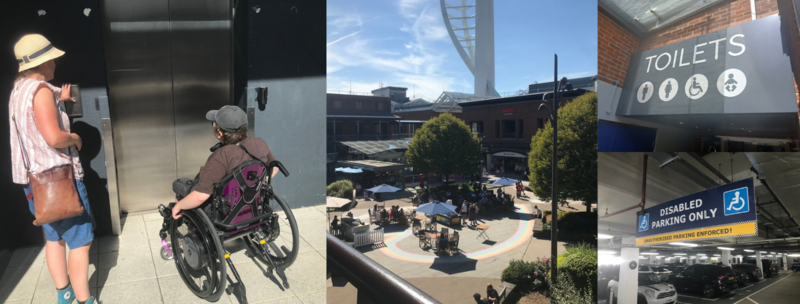
Dan White shared a powerful example from Gunwharf Quays, a venue he trusts when visiting with his daughter Emily, who uses a wheelchair.
What stands out in his story is the way accessibility has clearly been considered across the site, rather than bolted on as a single feature. Blue Badge parking bays are located next to lifts that provide direct access to the shopping area. Wide, flat walkways and generally level shop entrances make it easier for him and Emily to browse, shop and explore independently.
There are accessible toilets, a Changing Places toilet, clear signage, a well signposted quiet space, free sensory backpacks from the customer services desk, and an access guide that helps visitors plan with confidence.
Dan told me that this environment allows Emily to be a young woman first and a wheelchair user second. That line really stayed with me, because good accessibility should not make disability the centre of every experience. It should make room for the person.
For Emily, that means exploring at her own pace, making her own choices and enjoying the same experiences as her peers. For Dan, as a parent and carer, the impact goes beyond practical access. It gives him reassurance, pride and something that can be very rare: a moment to sit down with a coffee, relax, and simply watch his daughter flourish.
Access information should be easy to find
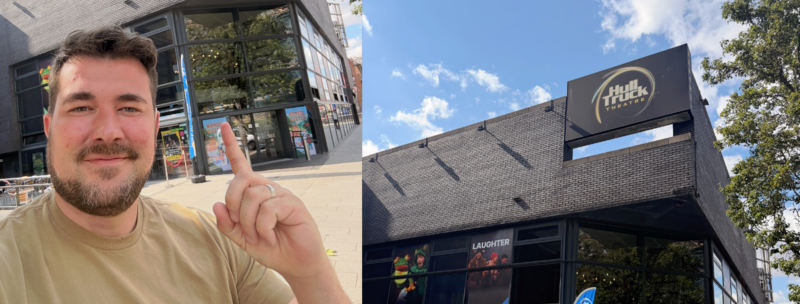
Ed Rex’s example comes from Hull Truck Theatre, an organisation he trusts because of the way it communicates accessibility online and in person.
What Ed values is that access information is easy to find and broken down by different needs, including mobility, visual, hearing and sensory accessibility. It's supported by practical details that help people understand what to expect before they arrive, including photographs, information about getting to the venue, and details of equipment and facilities.
That approach matters because planning often begins long before someone reaches the front door. A website can either build confidence or create more work. It can make people feel considered, or leave them hunting through pages trying to find one crucial piece of information.
For Ed, Hull Truck Theatre’s approach suggests that accessibility has been genuinely understood, rather than reduced to a statement about being an accessible venue.
He also values the way accessible performances are communicated. Captioned and BSL interpreted performances are clearly identified, making it easier for Deaf and hard of hearing audiences to find experiences designed with them in mind.
Good communication says: we have thought about who might want to come, what they might need, and how to make that information visible.
It also reminds us that accessibility means more than entering a building. At a theatre, accessibility means being able to follow, enjoy and participate in the performance.
Good information reduces anxiety
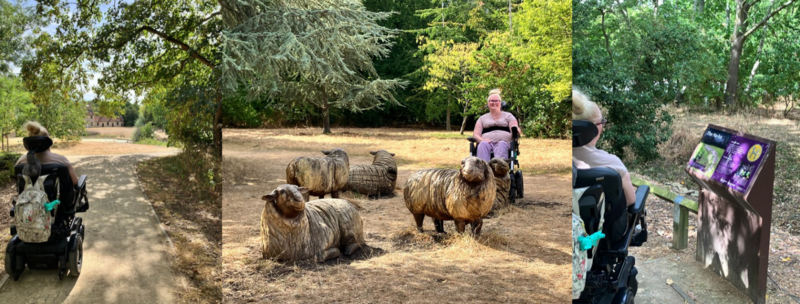
Kerry Thompson’s contribution brings this back to something many disabled people know well: the anxiety that can build before a visit.
As a full time wheelchair user, Kerry doesn't need places to tell her they are "fully accessible". She needs clear, honest information that helps her decide whether a space works for her.
At Great Linford Manor Park, what makes Kerry feel confident is the practical information. She trusts access information when she sees clear descriptions of paths, entrances and facilities. She trusts it when there are photos of routes and parking. She trusts it when measurements are included, rather than assumptions.
For Kerry, good information reduces anxiety, helps her plan, and allows her to avoid surprises. It makes her feel respected. In her words, it turns a visit into something she can look forward to, rather than worry about.
That is such an important shift. Accessibility information is not admin. It is part of the welcome.
When a venue shares an AccessAble Guide, displays a QR code linking to access information, includes photographs, explains routes and gives measurements, it sends a message before anyone arrives. It shows that access has been considered properly, and that disabled visitors are expected.
Show us how
Across Dan, Ed and Kerry’s stories, the examples are different, but the pattern is clear.
Good accessibility information is visible, practical and specific. Good inclusive practice considers the journey, the facilities, the communication and the person using them. Most importantly, it respects disabled people as decision makers.
That is what we do want to see instead of blanket claims. We are asking for practical information, not impossible promises.
Tell us where the parking is. Show us the route. Share the photographs. Give us the measurements. Explain the facilities. Make accessible performances easy to find. Make quiet spaces visible. Make staff aware that accessibility is part of the experience, not an extra favour.
And if something has limits, say that too. Honesty builds far more trust than overpromising ever will.
At AccessAble, this is why Detailed Access Guides matter. They give disabled people practical, verified information about places before they visit, so each person can decide whether a venue works for them.
The wider message is clear: don't just say you're accessible. Show us how.
Show us through your information, your photographs, your routes, your facilities, your communication and your attitude. Because when access information is clear, disabled people are not simply accommodated. We are expected, welcomed and able to take part.
That's what we want to see instead.